Matrices
Technical Specifications
Matrices are rectangular arrays of numbers, symbols, or expressions arranged in rows and columns. They are fundamental in mathematics, physics, engineering, computer science, and data analysis. A matrix is typically denoted by a capital letter and its elements by lowercase letters with double subscripts indicating row and column positions. The size of a matrix is defined by its number of rows and columns (e.g., an m×n matrix has m rows and n columns). Matrices can be added, subtracted, and multiplied under specific rules. Key types include square matrices (same number of rows and columns), identity matrices (ones on the diagonal, zeros elsewhere), and diagonal matrices (non-zero only on the diagonal). Operations like transposition (flipping rows and columns) and inversion (finding a matrix that, when multiplied, yields the identity) are crucial. Applications include solving systems of linear equations, representing linear transformations, performing rotations in 3D graphics, and analyzing networks. In data science, matrices are used for storing datasets and in machine learning algorithms. Understanding matrices is essential for advanced studies in STEM fields.
Usage & Handling
Checkout & Payment
Add to cart and checkout. Our team will contact you as soon as possible for payment, order confirmation and delivery details
Clinical Application
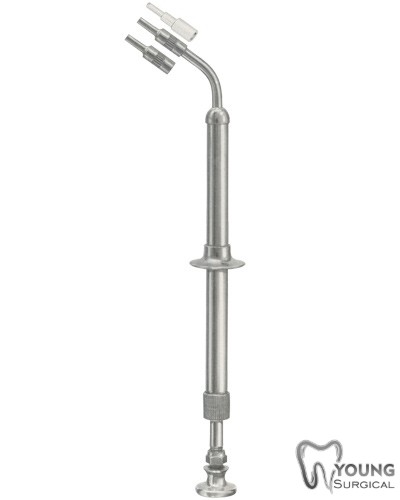
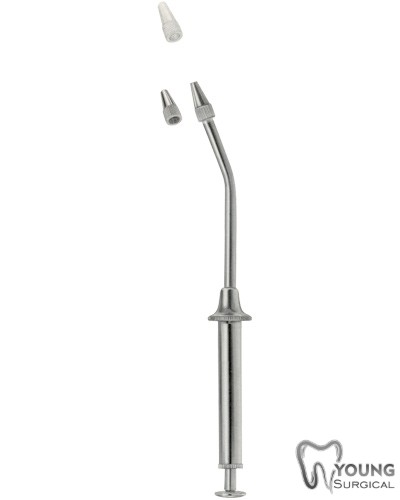
Designed for precision medical use. Follow standard clinical protocols for handling.
Sterilization
Fully autoclavable. Maintain clinical integrity through ultrasonic cleaning and sterilization.
Certified Precision Standards
Related products