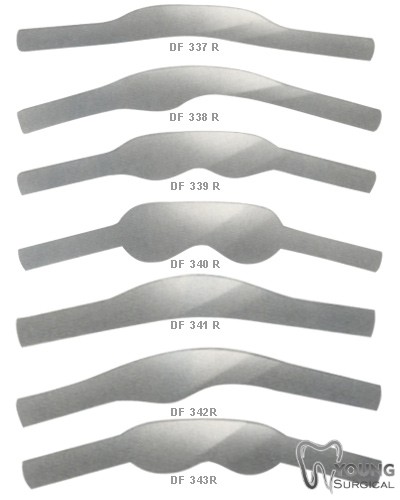
Matrices
Technical Specifications
Matrices are powerful mathematical tools used to organize, manipulate, and analyze data in rows and columns. They are fundamental in various fields such as computer graphics, engineering, physics, economics, and data science. A matrix is typically represented as a rectangular array of numbers, symbols, or expressions, arranged in rows and columns. Operations like addition, subtraction, multiplication, and inversion allow for solving systems of linear equations, performing transformations, and modeling complex systems. In computer graphics, matrices enable 3D transformations including rotation, scaling, and translation. In machine learning, they form the backbone of algorithms for linear regression, neural networks, and dimensionality reduction. Matrices come in different types: square, diagonal, identity, symmetric, sparse, and more. Their versatility makes them indispensable for calculations involving large datasets and linear algebra. Whether you’re a student, researcher, or professional, understanding matrices opens doors to advanced problem-solving and innovation. From simple 2×2 grids to massive sparse matrices in big data analytics, they provide a structured way to handle information efficiently. Explore the world of matrices and unlock new possibilities in computation and analysis.
Usage & Handling
Checkout & Payment
Add to cart and checkout. Our team will contact you as soon as possible for payment, order confirmation and delivery details
Clinical Application
Designed for precision medical use. Follow standard clinical protocols for handling.
Sterilization
Fully autoclavable. Maintain clinical integrity through ultrasonic cleaning and sterilization.
Certified Precision Standards
Related products